All too often those unidentified plants we pass by get marked as a weed and so thus, the war begins! We go to great lengths trying to rid our gardens and yard of these unidentified abundant plants (usually with very toxic chemicals to boot).
This article will explore some of the common plants we see in our landscape, what they can tell us about the soil underfoot, and their edibile/medicinal qualities. As we learn their names and myriad of benefits, they will become our allies. Maybe i've just taken on this outlook because the garden is more abundant with these plants, than what I try and cultivate. So I feel a bit more successful in my attempts and there's always a plentiful yield! I don't have to sow any seeds or water them in... They just want to be there regardless of my efforts. Also i've noticed, some steal the attention of japanese beetles, aphids, and those other hooligans that can wreak havoc on your precious garden.
A.k.a.
Companion plant
or in some cases
aromatic pest confusers
And I'm happy with that : )
 Plantain (Plantago major)
Description:
Plantain (Plantago major)
Description:
Grows in a rosette shape (leaves originating from central point, like dandelion and many other "weeds") Sort of leathery, smooth waxy, oval-shaped leaf with maybe a bit of red on the inner stem and veins running parallel to the margin of the leaf. Very common in lawns and throughout. It has been called "white man's footprint" by the Native Americans.
Medicinal Qualities:
One of the most abundant and widely distributed medicinal crops in the world. Can be applied to wounds, stings, and sores in order to
facilitate healing and prevent infection. Prepare a poultice by chewing leaves or using a mortar/pestle to grind up leaves and get their juices flowing.
The active chemical
constituents are aucubin (an anti-microbial agent), allantoin (which stimulates cellular growth and tissue regeneration), and mucilage
(which reduces pain and discomfort). Plantain has astringent
properties, and a tea made from the leaves can be ingested to treat
diarrhea and soothe raw internal membranes.
Nutrition:
Broadleaf plantain is also a
highly nutritious wild edible, that is
high in calcium and vitamins A, C, and K. The young, tender leaves can
be eaten raw, and the older, stringier leaves can be boiled in stews and
eaten
Soil Indicator:
Low fertility and a compacted soil.
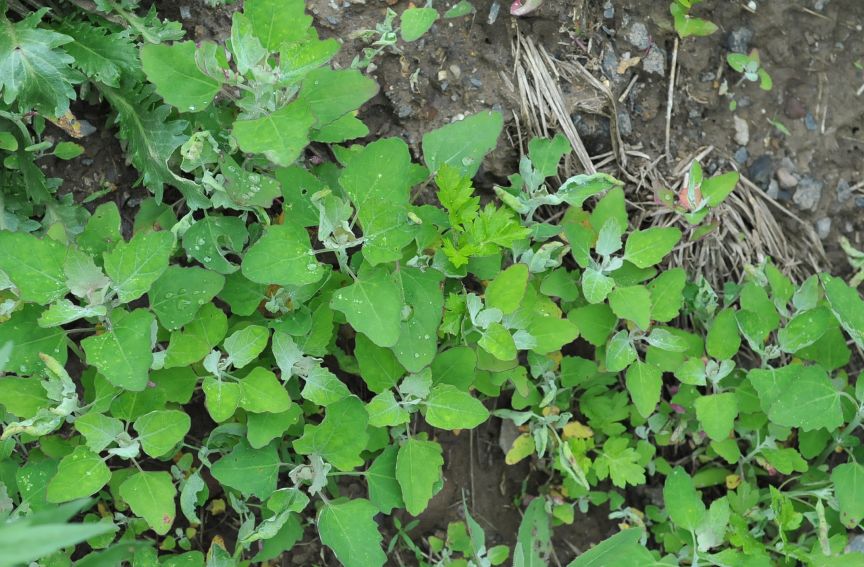
Lambs Quarter (Chenopodium album)
Description:
It is a tall herbaceous, perennial plant growing 3-6ft tall, with a woody root. The leaves are usually 2-8 in long, dark green, pinnate, with dense white flattened
hairs on the underside. The erect stem often has a red-purplish lines running vertical.
Nutrition/Prep:
The leaves and young shoots may be eaten raw, steamed in its entirety, or cooked like spinach, but should be
eaten in moderation due to high levels of oxalic acid.
Each plant produces tens of thousands of black seeds. These are high in protein, vitamin A, calcium, phosphorous, and potassium. Quinoa, a closely related species, is grown specifically for its seeds.
Companion:
Lamb's Quarter is vulnerable to leaf miners, making it a useful trap crop as a companion plant.
Growing near other plants, it attracts leaf miners which might
otherwise have attacked the crop to be protected. It is a host plant for
the beet leafhopper, an insect which transmits curly top virus to beet
crops. Also!! Has deep roots that pull up dormant nutrients from deep in you subsoil
Soil Indicator:
Very common annual garden weeds. Their presence in your garden is a sign of high fertility.
Purslane (Portulaca Oleracea)
Description:
It has smooth, reddish, mostly prostrate stems and alternate leaves clustered at stem joints and ends. Glossy, sorta plump looking leathery leaves. The yellow flowers have five regular parts. Creeping sorta ground cover, can make for a great addition to edges of food forest and in various guilds (groupings of plants that enjoy one another's company)
Nutrition/Prep:
Local super food!
Purslane contains more omega-3 fatty acids (alpha-linolenic acid, in particular) than any other leafy vegetable plant. Studies have found that Purslane has an extraordinary amount of EPA for a land-based
vegetable source. EPA is an Omega-3 fatty acid found mostly in fish,
some algae, and flax seeds. It also contains vitamins (mainly vitamin A, vitamin C, Vitamin E (alpha-tocopherol) and some vitamin B and carotenoids), as well as dietary minerals, such as magnesium, calcium, potassium, and iron. Also present are two types of betalain
alkaloid pigments, the reddish betacyanins (visible in the coloration
of the stems) and the yellow betaxanthins (noticeable in the flowers and
in the slight yellowish cast of the leaves). Both of these pigment
types are potent antioxidants and have been found to have antimutagenic
properties in laboratory studies. A half-cup of purslane
leaves contains as much as 910 mg of oxalate, a compound implicated in the formation of kidney stones; however, many common vegetables, such as spinach, also can contain high concentrations of oxalates.
~interesting side note~
When stressed by low availability of water, purslane, which has
evolved in hot and dry environments, switches to photosynthesis using Crassulacean acid metabolism
(the CAM pathway): At night its leaves trap carbon dioxide, which is
converted into malic acid (the souring principle of apples), and, in the
day, the malic acid is converted into glucose. When harvested in the
early morning, the leaves have ten times the malic acid content as when
harvested in the late afternoon, and thus have a significantly more
tangy taste.
The stems, leaves and flower buds are all edible. Purslane may be used
fresh as a salad, stir-fried, or cooked as spinach is, and because of
its mucilaginous quality it also is suitable for soups and stews.
Australian Aborigines use the seeds to make seedcakes. In Greek cuisine,
it's leaves and the stems are fryed with feta cheese, tomato, onion, garlic, oregano, and olive oil. Because of its high water content Purslane cooks down quite a bit. Pick
more than you think you will need. Makes a quick cold soup in hot
weather by cooking and blending together with other vegetables. It has a slightly sour and salty taste.
Companion:
As a companion plant,
Purslane provides ground cover to create a humid micro-climate for
nearby plants, stabilizing ground moisture. Its deep roots bring up
moisture and nutrients that those plants can use, and some, including
corn, will "follow" purslane roots down through harder soil that they
cannot penetrate on their own (ecological facilitation).
Soil Indicator:
If it's thriving, congratulations, you likely have high fertility!
 Mugwort (Artemisia vulgaris)
Description:
The leaves are smooth, dark green tint on the upper surface & white on the underside of the leaf. Very unique and once you learn to spot it, you'll see a lot of it! Look for it on the edges, open & abandoned lots and hedgebanks.
Properties/Medicinal:
Mugwort (Artemisia vulgaris)
Description:
The leaves are smooth, dark green tint on the upper surface & white on the underside of the leaf. Very unique and once you learn to spot it, you'll see a lot of it! Look for it on the edges, open & abandoned lots and hedgebanks.
Properties/Medicinal:
The mugwort plant contains essential oils (such as cineole, or wormwood
oil, and thujone), flavonoids, triterpenes, and coumarin derivatives.
There's a great deal of medicinal use recorded throughout history,
across cultures that deserves further inspection, if inclined. Thujone (also present in
Thuja plicata
(western red cedar), from which the name is derived), is toxic in large amounts or under prolonged intake. The species has a number of recorded historic uses in food, herbal medicine, and as a smoking herb.
“Mugwort has been used for hundreds of years in
Korea and is known to be effective in balancing women’s hormonal levels.
[It] contains natural antibiotics and sterilizers that help keep your
skin healthy and young.
…[It] is added to healing baths to ease discomfort from eczema, gout
and arthritis. Its sagelike, spicy flavor makes a delicious seasoning
for meat dishes.
The leaves used to be steeped in baths, to communicate
an invigorating property to the water.”
The juice and an infusion of the herb were given for intermittent
fevers and aches.
Basically, this use of mugwort helps to prevent and recover from the
cold and damp of autumn, winter and spring.
Arthritic conditions, join
pain, colds and flus, skin conditions, and everyday stresses can be
treated and prevented with this therapy.
The plant stimulates appetite, promotes good digestion, reduces
fevers and relieves tension. When prepared as a tea, mugwort also
provides an excellent source of minerals, especially calcium.
The Mugwort is said to have derived its name from having
been used to flavour drinks. It was, in common with other herbs, such as
Ground Ivy, used to a great extent for flavouring beer before the
introduction of hops. For this purpose, the plant was gathered when in
flower and dried, the fresh herb being considered unsuitable for this
object: malt liquor was then boiled with it so as to form a strong
decoction, and the liquid thus prepared was added to the beer. Until
recent years, it was still used in some parts of the country to flavour
the table beer brewed by cottagers.
Curly/Yellow Dock (Rumex Crispus)
Description:
It has smooth leaves shooting off from a large basal rosette,
with distinctive waved or curled edges. On the stalk flowers and seeds
are produced in clusters on branched stems, with the largest cluster
being found at the apex. The mature plant is a reddish brown color, and produces a stalk that grows to about 3ft high. Curly Dock grows in a wide variety of habitats, including disturbed
soil, waste areas, roadsides, fields/meadows, shorelines, and forest
edges.
It prefers rich, moist and heavy soils.
Nutrition/Prep:
It can be used as a wild leaf vegetable; the young leaves should be boiled in several changes of water to remove as much of the oxalic acid in the leaves as possible or can be added directly to salads in moderate amounts. Once the plant matures it becomes too bitter to consume.
Properties/Medicinal:
Dock leaves are an excellent source of both vitamin A and protein, and are rich in iron and potassium. Curly Dock leaves are somewhat tart due to the presence of high levels of oxalic acid,
and although quite palatable, this plant should only be consumed in
moderation as it can irritate the urinary tract and increase the risk of
developing kidney stones.
The plant has been used since 500 B.C. and has many medicinal properties, most of which
are based in the plant's roots. A poultice of the roots has been used to treat iron-deficiency
anemia for centuries. It's also a blood purifier and liver decongestant because the poultice
stimulates the liver to produce bile. It remedies constipation while strengthening the colon,
was employed to treat syphilis, and the powered roots were used as a tooth powder.
Curly dock acts as an astringent to treat wounds and bleeding. Application of a dock compress
helps with skin irritations and rubbing the leaves on your skin can relieve the itchy symptoms
of a stinging nettle rash.
The seeds were once roasted and used as a coffee substitute (hence the name Coffee-weed).
Other edible plant parts continue to be used today (see Modern Uses).
Companion:
With a deep tap-root, docks are able to pull nutrients from deep down in the sub-soil (dynamic accumulator )
Wood Sorrel (Oxalis acetosella)
Description:
Wood sorrel usually maxes out in height at 15 inches tall. Its small
heart-shaped, "folded" leaves grow in groups of 3. Its tiny flowers are
typically white or yellow though they can be pink or violet depending on species.
Nutrition/Prep:
 Oxalis meaning "sour" and is named, as such,
due to its oxalic acid content. Once again, that oxalic acid we see in many domesticated veges such as broccoli and spinach, is
considered toxic when consumed in large quantities because it inhibits
the absorption of calcium. Oxalic acid is not considered a problem when
consumed moderately and with a varied diet, however people with gout,
rheumatism and kidney stones should avoid it.
Properties/Medicinal:
Wood sorrel is also rich
in Vitamin C. Known to be used, by the meanest of sea pirates, in treating scurvy, fevers,
urinary infections, mouth sores, nausea and sore throats. It's
qualities and flavor are similar to sheep sorrel.
Oxalis meaning "sour" and is named, as such,
due to its oxalic acid content. Once again, that oxalic acid we see in many domesticated veges such as broccoli and spinach, is
considered toxic when consumed in large quantities because it inhibits
the absorption of calcium. Oxalic acid is not considered a problem when
consumed moderately and with a varied diet, however people with gout,
rheumatism and kidney stones should avoid it.
Properties/Medicinal:
Wood sorrel is also rich
in Vitamin C. Known to be used, by the meanest of sea pirates, in treating scurvy, fevers,
urinary infections, mouth sores, nausea and sore throats. It's
qualities and flavor are similar to sheep sorrel. There are no poisonous look-alikes.
Clover is often mistaken for wood sorrel but clover is not poisonous (actually it's also very nutritious/medicinal as well as an awesome pollinator and nitrogen fixer!!).
Mullein (Verbascum thapsus)
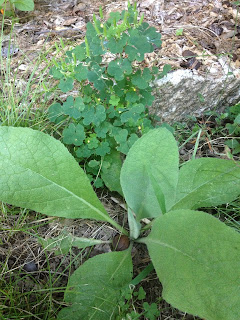
As shown above, growing friendly with the wood sorrel.
Description:
Biennial plants form the rosette the first year and the flower stalk the
following season. The leaves growing up to 12 in. are spirally arranged, often densely hairy and soft (
natures toilet paper). The plants first form a dense rosette of leaves
at ground level, subsequently sending up a tall flowering stem. The flowers
have five symmetrical petals; petal colours in different species
include yellow (most common), orange, red-brown, purple, blue, or white.
The fruit is a capsule containing numerous minute seeds.
Nutrition/Prep:
Not commonly prepared in meals but high in vitamins and minerals
Properties/Medicinal:
Dried leaves (most common) but some have reported using roots in medicinal smoking blends to treat issues in the lungs. Helps alleviate asthma (seems counter intuitive that one would smoke something to relieve asthma/pulmonary disease) but used by widely used by Natives for this very reason.
A very beneficial
respiratory remedy useful inmost conditions that affect this vital
system; an ideal remedy for toning the mucous membranes of the
respiratory system, reducing inflammation whilst stimulating fluid
production and thus facilitating expectoration. It is considered a specific in bronchitis where there is a hard cough with soreness. Its anti-inflammatory and demulcent properties indicate its use in inflammation of the trachea and associated conditions.
Externally an extract made in olive oil is excellent in soothing and healing any inflamed surface or easing ear problems.
Used to destroy germs and can be used very beneficially, in treating the skin well. Equal parts of Mullein flowers and garlic can be chopped up and mixed with oil (generally olive) and made into an ear drop remedy for infections.
Companion:
Attracts many pollinators and creates nice habitat for some insects in the winter.
 Green Amaranth (Amaranthus viridis)
Description:
Amaranth is a moderately tall, broad-leafed, bushy type of plant that
grows about six feet in height and produces a brightly colored flowery
head containing a very large number of seeds. (Amaranth plants can
produce as many as 60,000 seeds.)
Green Amaranth (Amaranthus viridis)
Description:
Amaranth is a moderately tall, broad-leafed, bushy type of plant that
grows about six feet in height and produces a brightly colored flowery
head containing a very large number of seeds. (Amaranth plants can
produce as many as 60,000 seeds.) Amaranth is a member of the Chenopodiaceae family of plants and
therefore is a relative of beets, Swiss chard, spinach, and quinoa. For
this reason, some of its nutritional characteristics are more like these
dark green leafy vegetables than the cereal grain foods, which are
members of an entirely different plant family, called Graminae. (Like,
quinoa and millet, amaranth is not technically a grain, but because it
is enjoyed in meals like other true grains, it is usually referred to as
such.)
Nutrition/Prep:
WARNING: Seeds and leaves extremely nutritious.
"All this nutrition and flavor comes from a plant that requires little water and can grow in almost any type of soil. It’s no wonder amaranth is often dubbed a “superfood.”
Seeds have a long history as used by many Natives. Amaranth is a
gluten-free food and a source of
complete protein—it
contains all the essential amino acids, including lysine, which is
lacking in most grains. High in fiber and a good source of magnesium and
iron, Amaranth is a spectacular addition to your diet. This little
powerhouse is perfect for gluten free and vegan diets.
It is also a good source of
Niacin, and a very good source of Protein,
Vitamin A, Vitamin C, Riboflavin, Vitamin B6, Folate, Calcium, Iron,
Magnesium, Phosphorus, Potassium, Zinc, Copper and Manganese. ***BOOM*** (http://nutritiondata.self.com/facts/vegetables-and-vegetable-products/2304/2)
Not to mention, with over 60 varieties there's a lot of cool colors!!
Steam the leaves, add to stir fry, blanch... prepare like spinach. Tender new growth can be eaten raw. Get this green goodness in your diet somehow... somewhere!
"With a huge impetus towards consuming highly nutritious foods
(superfoods) and living a healthy, high-vibrational life, let us equally
work to preserve/promote the health of our planet -Look to your
immediate surroundings and the freshest, most vital foods before purchasing items with a large carbon footprint."
Thanks for reading this post! I fully encourage you to ask any questions but most importantly, go outside and get familiar (if you're not already) with nature and all of the wonderful gifts she has waiting for us.
Sources:
- http://en.wikipedia.org/wiki/Plantago
- http://www.treehugger.com/green-food/what-your-gardens-weeds-are-trying-to-tell-you.html
- http://en.wikipedia.org/wiki/Portulaca_oleracea
- http://en.wikipedia.org/wiki/Mugwort
- Bensky, D, Clavey, S, & Stoger, E. 2004. Chinese Herbal Medicine Materia Medica, 3rd Ed.
- http://botanical.com/botanical/mgmh/m/mugwor61.html
- http://en.wikipedia.org/wiki/Rumex_crispus
- http://en.wikipedia.org/wiki/Verbascum
- http://en.wikipedia.org/wiki/Oxalis_acetosella
- http://www.wildedible.com/wild-food-guide/wood-sorrel